


Mathematical and Empirical Model of “Bypassed Nodes” in Price Action
Conceptual and Intuitive Definition of Bypassed Nodes
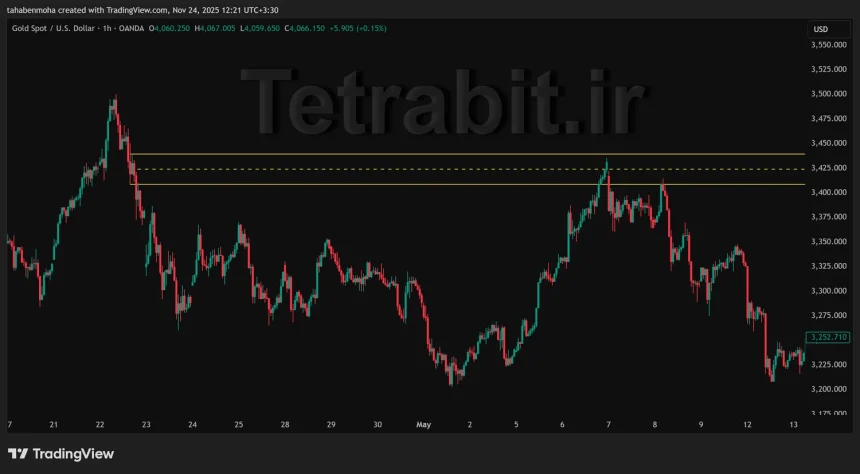
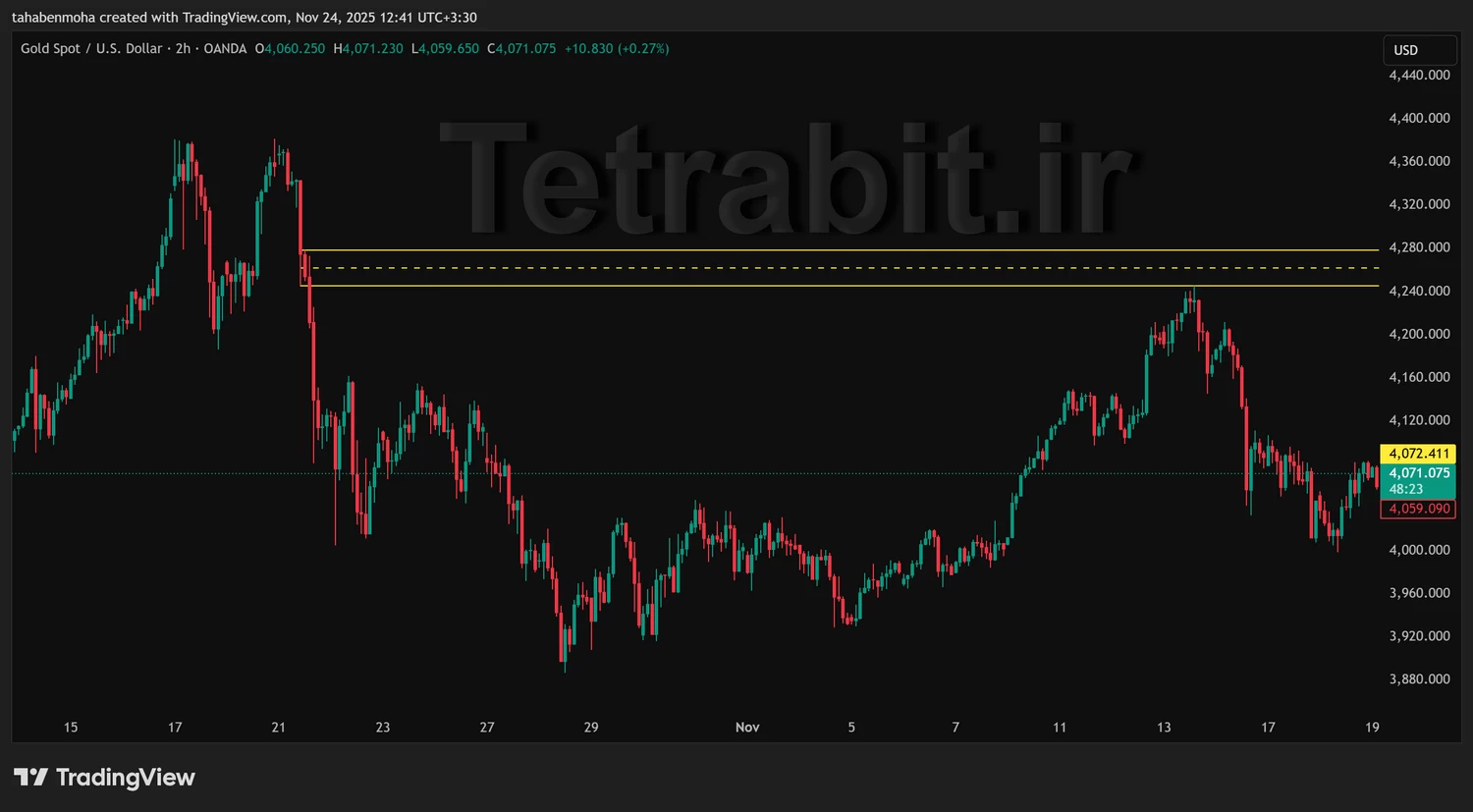
A node is a price area where the market shows short-term pause, minor fluctuation, or consolidation. A bypassed node occurs when price, in a rapid move (upward or downward), passes through a range without recording sufficient price reaction at its boundaries or center. Intuitively, this area remains as an “unfinished business of the market,” and in the future, the probability of reaction to its lower, middle, and upper levels increases.
- Signs: Rapid passage, long candles, short wicks, absence of confirming candles in the passing range.
- Implication: Becoming hidden support/resistance in the future, especially at first encounters.
Basic Mathematical Formulation
Consider price as a continuous-time process \( p(t) \). To model the intensity of passage and lack of visitation, we define several auxiliary functions.
Velocity and Movement Intensity
Instantaneous price velocity:
\[
v(t) = \frac{dp(t)}{dt}
\]
Normalized intensity relative to the average over interval \( [t – \Delta t, t] \):
\[
\Gamma(t) = \frac{|v(t)|}{\frac{1}{\Delta t}\int_{t-\Delta t}^{t} |v(\tau)|\, d\tau}
\]
- Rapid-move criterion: If \( \Gamma(t) \gg 1 \) holds for a specific time sequence, the move is considered rapid.
Price Visitation Density
Define visitation density as the count of transactions/candles passing near level \( p \) in time window \( [t_0, t_1] \):
\[
f(p; t_0, t_1) = \int_{t_0}^{t_1} \kappa\!\big(p, p(t)\big)\, dt
\]
where \( \kappa \) is a proximity kernel (e.g., Gaussian):
\[
\kappa\!\big(p, p(t)\big) = \exp\!\left(-\frac{(p – p(t))^2}{2\sigma^2}\right)
\]
- Bypassed node: A range \( [p_-, p_+] \) where \( f(p; t_0, t_1) \) is abnormally small.
Formal Definition
Let \( \mu_f \) and \( \sigma_f \) be the mean and standard deviation of \( f(p; t_0, t_1) \) over the considered price domain. Then \( [p_-, p_+] \) is a bypassed node if:
\[
\forall p \in [p_-, p_+]:\quad f(p; t_0, t_1) \le \mu_f – k \cdot \sigma_f
\]
and simultaneously, during passage, movement intensity is large:
\[
\exists\, [\tau_-, \tau_+] \subseteq [t_0, t_1] :\quad p(\tau_-) \approx p_-,\; p(\tau_+) \approx p_+,\;\text{and}\;\Gamma(t) \ge \Gamma_{\min}\;\; \forall t \in [\tau_-, \tau_+]
\]
- Parameters: \( k \) detection threshold (e.g., \( 1 \) or \( 2 \)); \( \Gamma_{\min} \) minimum intensity.
Internal Structure of Node and Reaction Points
For each node \( [p_-, p_+] \), define three key levels:
\[
p_{\text{low}} = p_-,\qquad
p_{\text{mid}} = \frac{p_- + p_+}{2},\qquad
p_{\text{high}} = p_+
\]
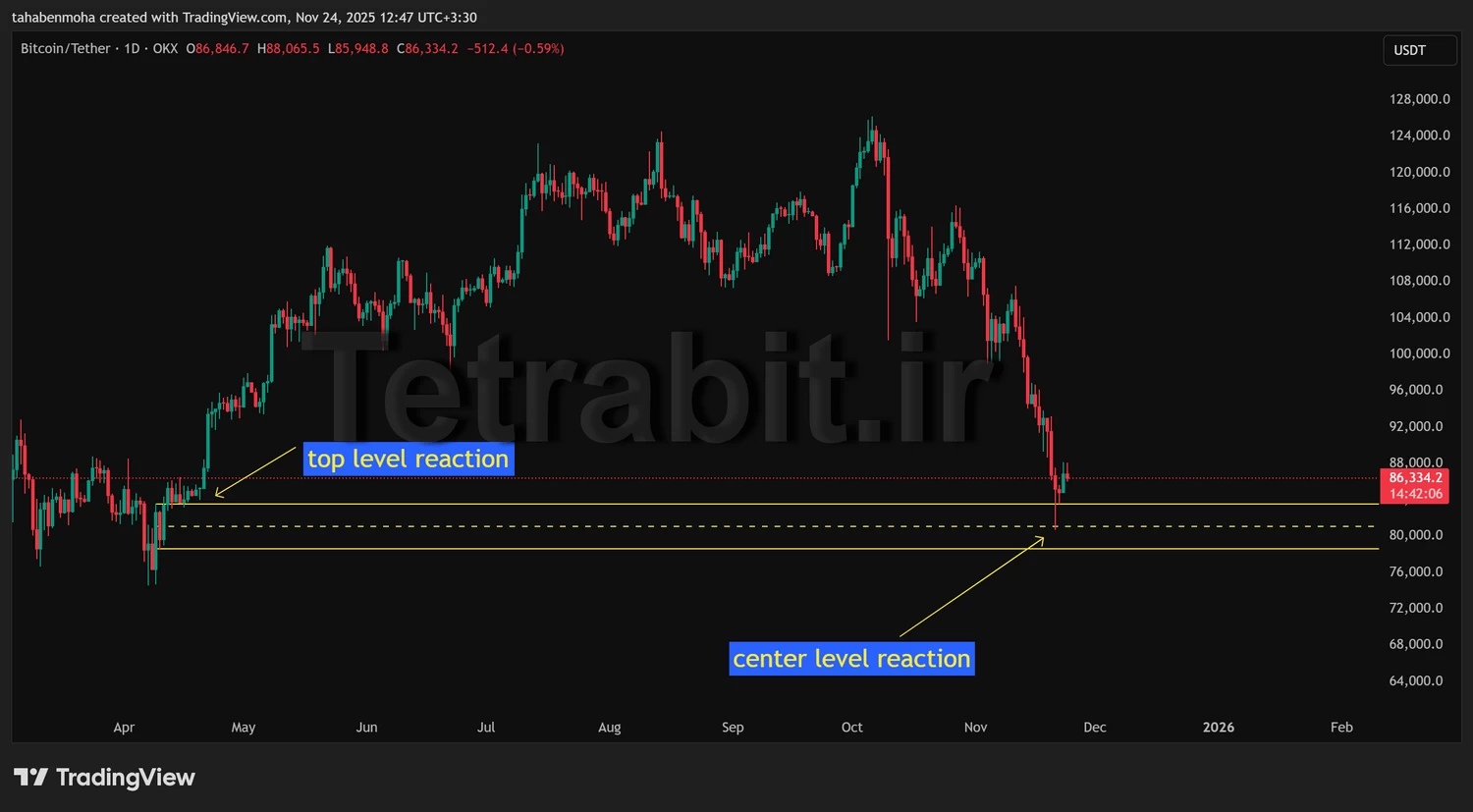
- Lower Node: \( p_{\text{low}} \) is the first likely touch and often the initial reaction point.
- Mid Node: \( p_{\text{mid}} \) is the balance area / test of the efficiency of the initial passage.
- Upper Node: \( p_{\text{high}} \) is the final boundary and often the place of reversal or ultimate breakout.
Reaction Probability Function
Define reaction probability \( \mathcal{R} \) as a function of passage intensity, node size, and lack of prior visitation:
\[
\mathcal{R}(p \mid [p_-, p_+]) =
1 – \exp\!\Big(-\alpha \cdot \overline{\Gamma} \cdot
\frac{p_+ – p_-}{\Delta p_{\text{ref}}} \cdot
\big(1 – \tilde{f}(p)\big)\Big)
\]
where \( \overline{\Gamma} \) is average intensity during initial passage, \( \Delta p_{\text{ref}} \) is a scaling reference (e.g., ATR), \( \tilde{f}(p) \) is normalized visitation density, and \( \alpha \) is an empirical calibration parameter.
Automatic Detection Criteria in Candlestick Data
For OHLC data on a given timeframe, automatic detection of bypassed nodes is based on three criteria:
- Speed–Body Criterion:
\[
\frac{\text{BodyLength}_t}{\text{ATR}_N} \ge \beta,\quad
\frac{\text{ShadowSum}_t}{\text{BodyLength}_t} \le \eta
\]
with thresholds \( \beta \) (e.g., 1.2–2.0) and \( \eta \) (e.g., 0.5). - Passage Continuity Criterion:
\[
\sum_{i=t}^{t+M} \mathbb{1}\!\left(\frac{\text{BodyLength}_i}{\text{ATR}_N} \ge \beta\right) \ge m_{\min}
\]
where \( M \) is sequence length and \( m_{\min} \) the minimum number of rapid candles. - Lack-of-Visitation Criterion:
\[
\int_{t}^{t+M} \kappa\!\big(p, p(\tau)\big)\, d\tau \le \epsilon,\quad \forall p \in [p_-, p_+]
\]
with small \( \epsilon \).
Node range selection: Obtain \( [p_-, p_+] \) from the bounds of the first/last candles in the rapid passage, or enclose minima of density with a volume profile.
Future Reaction Hypothesis and Empirical Tests
Main hypothesis: After a rapid passage and formation of a bypassed node, the probability of price reaction in future encounters with \( p_{\text{low}}, p_{\text{mid}}, p_{\text{high}} \) increases.
Definition of Encounter and Reaction
- Encounter:
\[
\exists\, t^*: \; \min\{H_{t^*}, p_{\text{high}}\} – \max\{L_{t^*}, p_{\text{low}}\} \ge 0
\]
meaning candle \( t^* \) touches or enters the node range. - Reaction:
\[
\Delta p_{\text{post}}(h) = p(t^* + h) – p(t^*),\quad
\text{Valid if } |\Delta p_{\text{post}}(h)| \ge \rho \cdot \text{ATR}_N
\]
with horizon \( h \) (number of candles) and threshold \( \rho \).
Evaluation Metrics
- Hit Rate:
\[
\text{HitRate} = \frac{\text{Number of Encounters}}{\text{Number of Opportunities}}
\] - Reaction Rate:
\[
\text{ReactRate} = \frac{\text{Number of Valid Reactions}}{\text{Number of Encounters}}
\] - Reaction Size:
\[
\overline{|\Delta p_{\text{post}}(h)|},\quad \text{and the full distribution of } \Delta p_{\text{post}}(h)
\]
Statistical tests: Use non-parametric tests (e.g., Mann–Whitney) to compare reaction sizes in node vs. non-node areas; apply logistic regression to model reaction probability based on \( \overline{\Gamma}, (p_+ – p_-), \tilde{f} \):
\[
\Pr(\text{Reaction}=1) = \sigma\!\left(\beta_0 + \beta_1 \overline{\Gamma} + \beta_2 \frac{p_+ – p_-}{\text{ATR}_N} + \beta_3 (1 – \tilde{f})\right),\quad
\sigma(x) = \frac{1}{1 + e^{-x}}
\]
Trading Application and Risk Management
Entry and Exit Rules Based on Nodes
- Entry: Enter on the first encounter with \( p_{\text{low}} \) or \( p_{\text{high}} \) with candlestick confirmation (pin bar / engulfing).
- Stop Loss:
\[
\text{SL} = p_{\text{edge}} \pm \lambda \cdot \text{ATR}_N
\]
with \( \lambda \in [0.5, 1.5] \) depending on volatility. - Targets:
\[
\text{TP}_1 = p_{\text{mid}},\quad \text{TP}_2 = p_{\text{opposite edge}}
\]
or based on R: \( \text{TP} = \text{Entry} \pm R \cdot \text{Risk} \). - Direction Filter:
\[
\text{Bias} = \text{sign}\!\left(\text{EMA}_{N_1} – \text{EMA}_{N_2}\right),\quad N_1 < N_2
\]
Position Sizing
Based on estimated reaction probability \( \mathcal{R} \) and variance of post-encounter returns, calibrate position size:
\[
w \propto \frac{\mathcal{R}}{\text{Var}\big(\Delta p_{\text{post}}(h)\big)}
\]
Automatic Detection Algorithm and Pseudocode
Suggested steps for implementation on candlestick data:
- Compute Reference Volatility: \( \text{ATR}_N \).
- Label Rapid Candles:
\[
\frac{\text{BodyLength}_t}{\text{ATR}_N} \ge \beta,\;\; \frac{\text{ShadowSum}_t}{\text{BodyLength}_t} \le \eta
\] - Detect Passage Sequence: Cluster rapid candles into contiguous sequences of length \( \ge m_{\min} \).
- Extract Node Range: From min Low and max High of the sequence, construct \( [p_-, p_+] \).
- Validate Lack of Visitation:
\[
f(p; t_{\text{seq start}}, t_{\text{seq end}}) \le \mu_f – k\sigma_f
\] - Record Reaction Levels: \( p_{\text{low}}, p_{\text{mid}}, p_{\text{high}} \).
- Monitor Encounters: Define encounters and measure \( \Delta p_{\text{post}}(h) \).
- Statistics and Calibration: Optimize \( \beta, \eta, m_{\min}, k, \Gamma_{\min}, \alpha \) on historical data.
Case Study on a Resistance Area and Bypassed Node
Suppose on XAU/USD a region between \( 3435 \) and \( 3445 \) was previously passed rapidly. Using the above criteria, the range \( [p_-, p_+] = [3435, 3445] \) is detected as a bypassed node. Reaction points:
- Lower Node: \( p_{\text{low}} = 3435 \)
- Mid Node: \( p_{\text{mid}} = 3440 \)
- Upper Node: \( p_{\text{high}} = 3445 \)
On subsequent encounters, evaluate valid reactions using threshold \( \rho \cdot \text{ATR}_N \), and plan entries/exits per the risk-management rules above.
Conclusion
Bypassed nodes provide a coherent framework to identify the market’s “unfinished business”: combining passage intensity, lack of visitation, and the three-level structure (lower/mid/upper) forms a basis for automatic detection, empirical testing, and trading exploitation. With parameter calibration on each market’s historical data, this tool can improve decision-making precision and risk management.