

The Concept of Fractals in Technical Analysis of Financial Markets: Repeating Structures Within Price Fluctuations
Fractals in technical analysis are recurring, self-similar patterns that help traders identify price reversal points on charts. This article thoroughly examines the concept of fractals, their applications in the market, and practical ways to use them.

🧩 What Is a Fractal? Mathematical and Visual Definition
A fractal in mathematics refers to structures that reflect parts of the whole in a similar way at every scale. The concept was introduced by French mathematician Benoît Mandelbrot and later applied in various sciences including physics, biology, and economics.
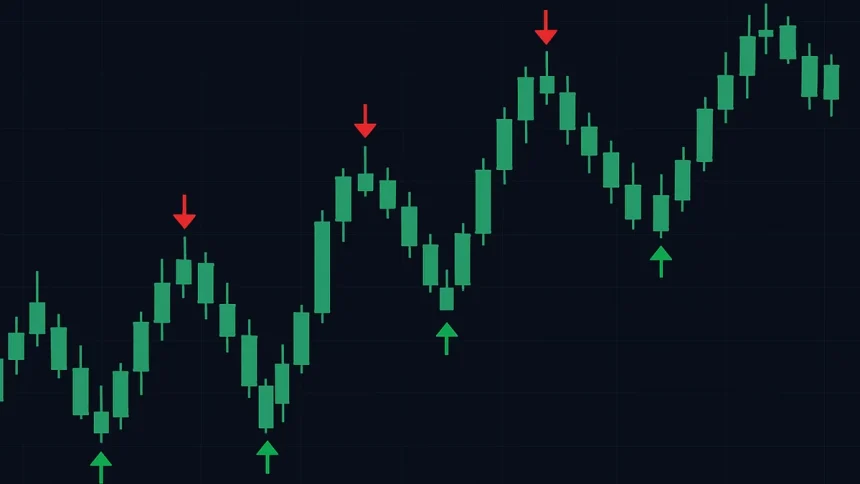
In financial markets, fractals are price patterns that repeat across different timeframes with similar structures. These patterns usually appear at price reversal points and can signal a trend change.
📊 Fractals in Technical Analysis: Operational Definition
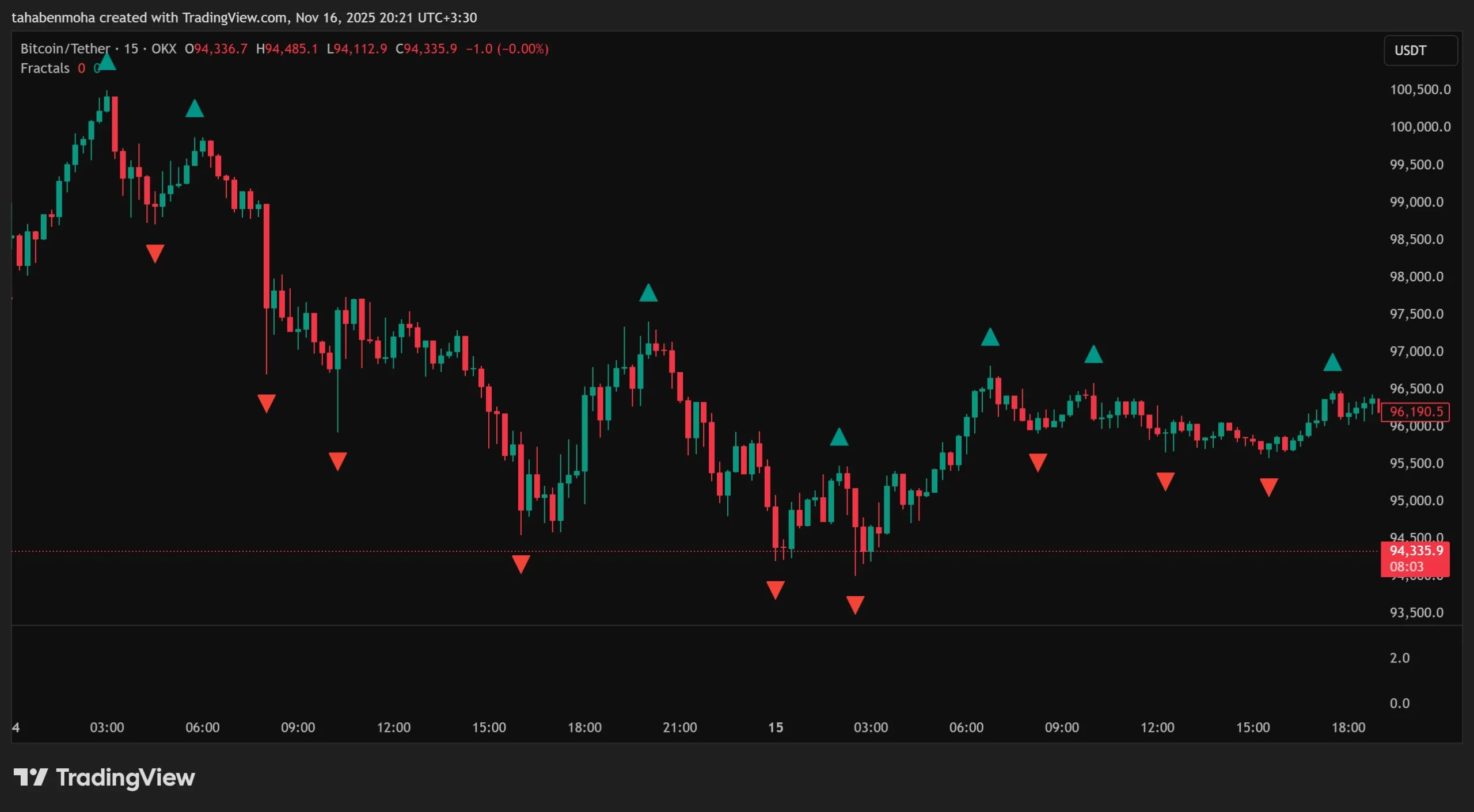
In technical analysis, fractals are typically defined as five-candle patterns:
• **Bullish Fractal**:
– The middle candle has the lowest low compared to the two candles before and after it.
– Pattern: High1 > High2 > High3 < High4 < High5
• **Bearish Fractal**:
– The middle candle has the highest high compared to the two candles before and after it.
– Pattern: Low1 < Low2 < Low3 > Low4 > Low5
These patterns were introduced by Bill Williams in his trading system and are available as built-in indicators in many trading platforms such as MetaTrader.
🔍 Characteristics of Fractals on Charts
• **Self-similarity**: Fractals appear across different timeframes with similar structures.
• **Repeatability**: Fractal patterns continuously recur on charts.
• **Identifying reversal points**: Fractals usually appear where price is ready to change direction.
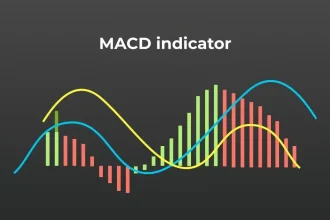
• **Compatibility with other indicators**: Fractals can be combined with tools like MACD, RSI, and moving averages.
🧠 Applications of Fractals in Trading
1. **Identifying entry and exit points**
By recognizing bullish or bearish fractals, traders can determine entry or exit points more accurately.
2. **Setting stop-loss and take-profit**
Fractals can act as support and resistance levels. Placing a stop-loss below a bullish fractal or above a bearish fractal is a common risk management method.
3. **Trend confirmation with higher timeframes**
If a fractal on a lower timeframe aligns with the trend on a higher timeframe, the trade has a higher chance of success.
4. **Combining with price action**
Fractals alongside candlestick patterns like pin bars, engulfing, or breakout setups generate strong signals.
📐 Fractals and Chaos Theory
One of the most fascinating aspects of fractals is their connection to chaos theory. Financial markets are inherently nonlinear and complex, but fractals show that within this chaos, recognizable patterns exist. These patterns help traders make more rational decisions in volatile conditions.
📈 Practical Example: Fractal on Gold Chart
Suppose a bearish fractal appears on the 4-hour gold chart (XAUUSD). This fractal indicates that price is likely to reverse from the current level. If this fractal coincides with divergence in MACD, it provides a stronger sell signal.
A trader can enter a short position below the fractal’s low and place the stop-loss above the fractal’s high. As the downtrend continues, new fractals serve as points for trade management.
⚙️ **How to Use the Fractal Indicator**
On platforms like MetaTrader or TradingView, the fractal indicator automatically displays fractal points with arrows or triangles on the chart. This indicator usually works with a one-candle delay because it requires the next candle to confirm the pattern.
For better use of this indicator:
• Choose the appropriate timeframe (e.g., H1 or H4)
• Combine fractals with trendlines or Fibonacci levels
• Use multiple confirmations before entering a trade
📌 **Conclusion**
Fractals are powerful tools for analyzing price behavior in financial markets. By identifying recurring patterns on charts, traders can better understand reversal points, support and resistance levels, and major trends. Combining fractals with other technical tools enhances analytical accuracy and reduces trading risk.