



What Are Stablecoins? A Complete Review of Stablecoin Types, Advantages, Disadvantages, and Their Future in Financial Markets
This article is a comprehensive and technical guide to understanding stablecoins (USD and non-USD), their technical architecture,
role in DeFi, risks, regulations, and future outlook.
Introduction
The extreme volatility in crypto markets created the need for a stable-value instrument—stablecoins.
These tokens are usually backed by fiat currencies (USD, EUR), commodities (gold, silver),
crypto collateral (digital assets), or algorithms (supply/demand balancing).
The result is a low-volatility digital asset used for payments, DeFi, inflation hedging, and fast international settlements.
- Purpose: Reduce volatility and provide a stable unit of account in crypto ecosystems.
- Use Cases: Trading, lending, yield farming, cross-border payments, liquidity management.
- Variety: USD-based, EUR-based, JPY-based, and commodity-backed like gold/silver.
History of Stablecoins
The first attempts to create stable digital currencies date back to 2014–2015, with projects like BitUSD and NuBits using early
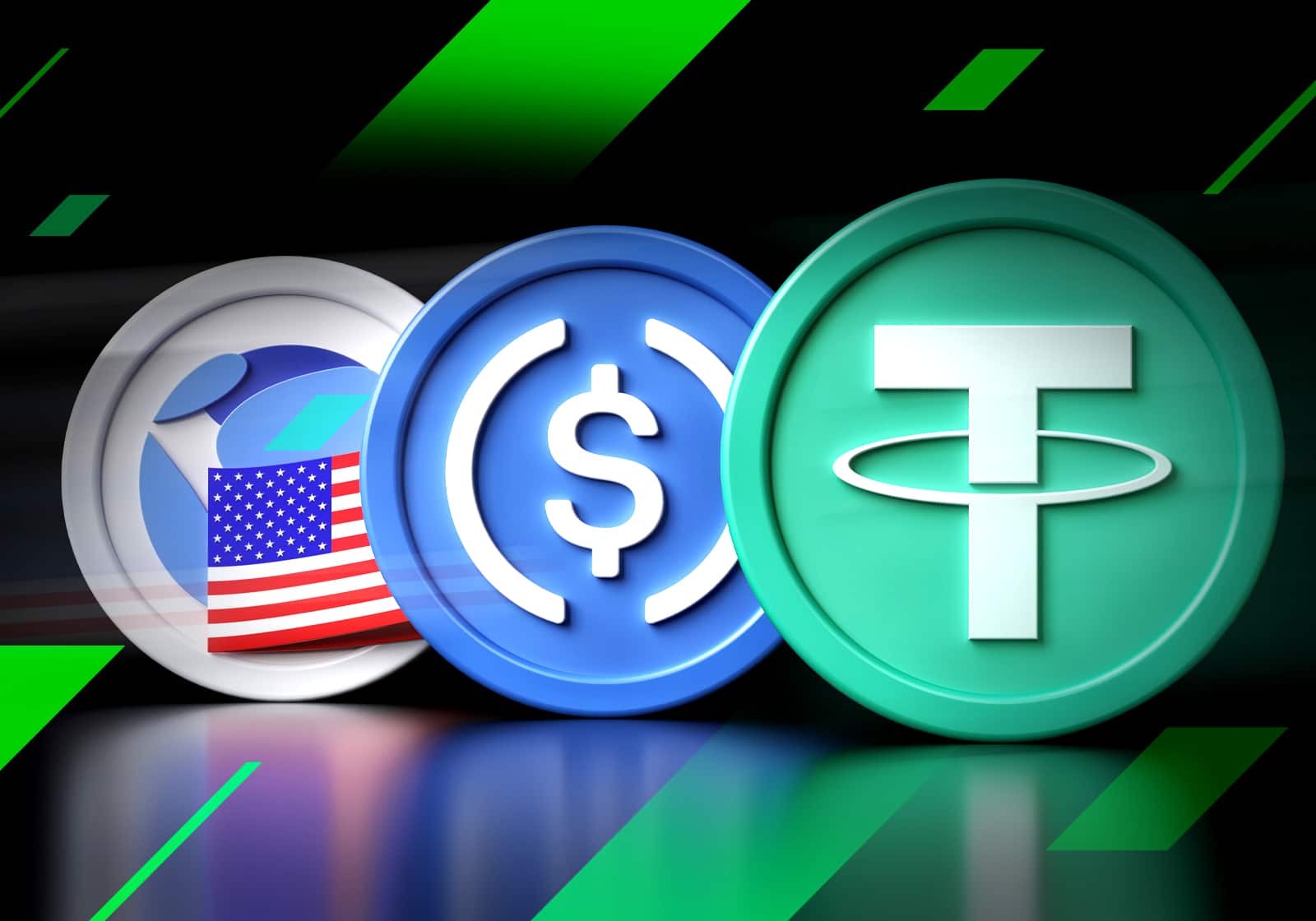
collateralization and algorithmic models. As exchanges and DeFi grew, USDT (Tether) quickly became the largest USD stablecoin.
Then USDC entered with a focus on reserve transparency, and DAI introduced a decentralized crypto-collateral model.
Later, non-USD stablecoins like EURS (Euro), GYEN/JPYC (Japanese Yen), and commodity-backed tokens like PAXG/XAUT (Gold) emerged.
- First Wave: Early algorithmic and collateralized models with stability challenges.
- Second Wave: Growth of USD-backed tokens (USDT/USDC) as liquidity standards.
- Third Wave: Currency and commodity diversification with focus on transparency and audits.
- Key Lesson: Algorithmic failures (e.g., UST collapse) highlighted the importance of real reserves and risk management.
Types of Stablecoins
Fiat-backed
Tokens backed by cash or short-term securities held by financial institutions. Examples: USDT, USDC, EURS.
Main advantage: stability and liquidity; challenges: centralized reserves and regulatory risks.
- Pros: Strong peg, wide adoption, efficient for payments.
- Cons: Reliance on custodians, periodic audits, exposure to sanctions/regulations.
Crypto-collateralized
Minted by over-collateralizing digital assets (e.g., ETH); example: DAI. Managed by smart contracts and decentralized governance.
- Pros: On-chain transparency, no reliance on banks.
- Cons: Liquidation risk during market crashes, complex parameters.
Algorithmic
Peg maintained by adjusting supply/demand and incentivizing arbitrage. High risk of peg failure; historical example: UST.
- Pros: No need for centralized reserves.
- Cons: Fragile during market shocks, dependent on collective trust.
Commodity-backed
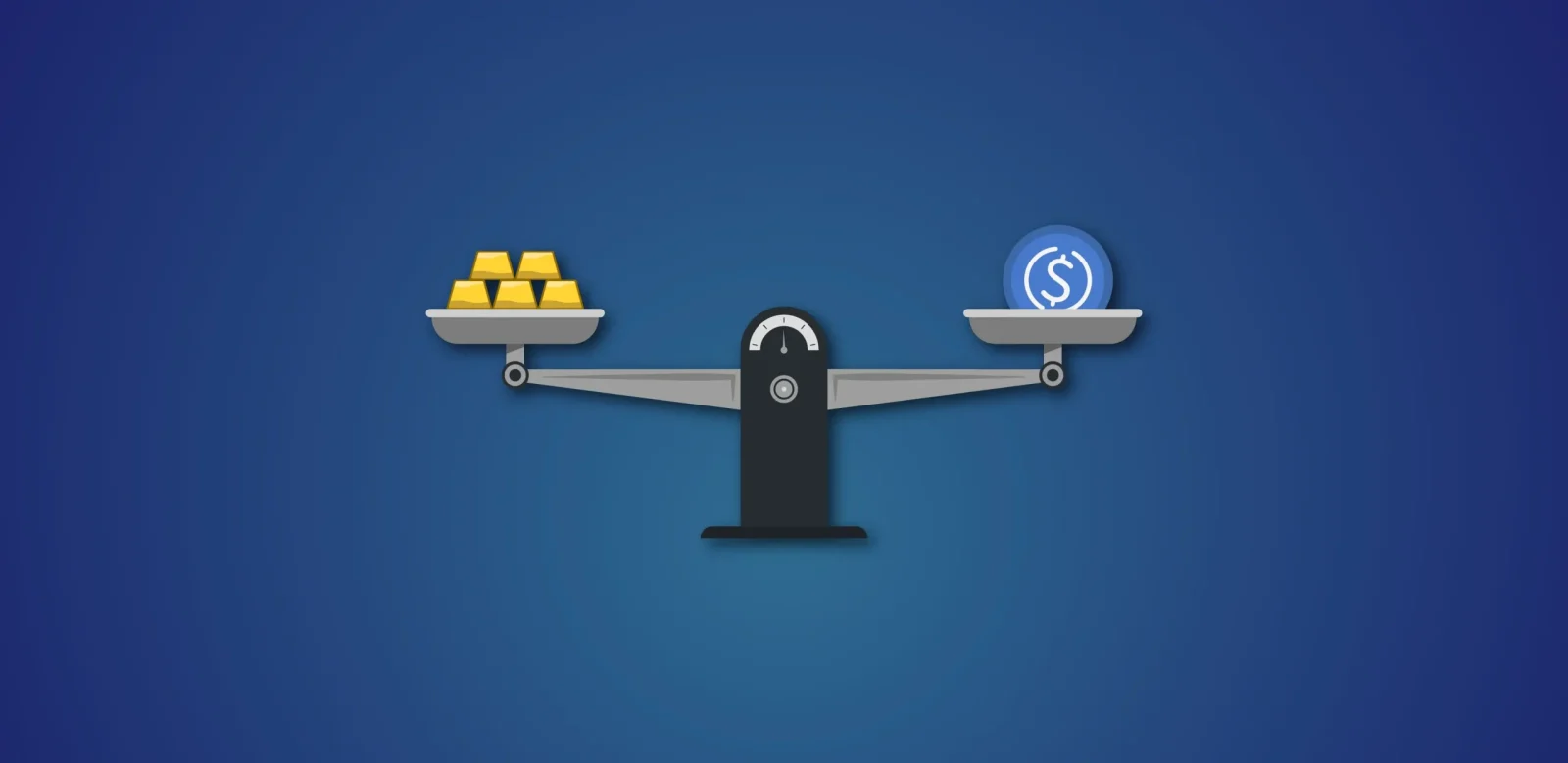
Tokens representing physical assets like gold/silver; examples: PAXG, XAUT. Useful for inflation hedging and portfolio diversification.
- Pros: Real-world backing, redeemable.
- Cons: Custody/transfer fees, jurisdictional risks.

Major Stablecoins and Technical Comparison
Name | Backing Type | Asset | Advantages | Challenges |
|---|---|---|---|---|
USDT (Tether) | Fiat | USD | Liquidity: Very high; Adoption: Widely accepted in exchanges | Transparency: Controversial; Regulation: Highly sensitive |
USDC (Circle) | Fiat | USD | Audits: Regular; Integration: Strong with institutions | Dependency: US regulations; Banking risk: Exists |
DAI (MakerDAO) | Crypto | On-chain collateral basket | Decentralized: On-chain governance; Transparency: Full | Complexity: Parameters; Liquidation: Risk during crashes |
EURS (Stasis Euro) | Fiat | EUR | Diversification: Useful in Europe; Reserve reports: Periodic | Liquidity: Lower than USD tokens; EU regulations: Strict |
PAXG (Pax Gold) | Commodity | Gold | Backing: 1 oz gold; Redeemable: Possible | Fees: Custody/transfer; Jurisdiction: Limitations |
XAUT (Tether Gold) | Commodity | Gold | Infrastructure: Tether; Liquidity: Decent | Centralization: Limited vaults; Trust: Custodian-dependent |
Technical Architecture and Peg Mechanisms
Core Components
- Smart Contracts: Mint/burn logic, collateral management, governance parameters.
- Reserve Custodians: Banks/vaults for fiat/commodity; audit reports and
Proof of Reserve. - Price Oracles: Feed asset prices; critical for collateralized models.
- Peg Mechanisms: Arbitrage, direct redemption, interest rates, stability fees.
Peg Maintenance by Model
- Fiat-backed: 1:1 redemption; sell pressure managed by burning tokens and releasing reserves.
- Crypto-collateralized: Over-collateralization, automatic liquidation, dynamic interest rates for balance.
- Algorithmic: Supply adjustments with market incentives; fragile under severe shocks.
- Commodity-backed: Peg to real-time gold/silver prices; redeemable physically or in cash.
Role of Stablecoins in DeFi
DeFi cannot function efficiently without a stable unit of account. Stablecoins stabilize liquidity, reduce volatility risks,
and enable the design of complex financial products.
- AMMs: Trading pairs with stablecoins (e.g., USDC/ETH) reduce price slippage.
- Lending/Borrowing: Collateralization with stablecoins creates predictable interest rates.
- Yield Farming: Income strategies with lower volatility compared to highly volatile assets.
- Instant Settlement: Cross-border payments with low fees and short settlement times.
Why USD Stablecoins Dominate and the Role of Non-USD Options
The US dollar is the world’s reserve currency—it is natural that USD stablecoins have the highest liquidity and adoption.
However, the growth of regional regulations (such as in Europe) and local payment needs have opened space for Euro, Yen, and commodity-backed stablecoins.
- USD-based: Massive liquidity, global adoption, deep integration with exchanges.
- Euro-based: Suitable for European trade, aligned with MiCA framework.
- Yen-based: Useful for Asian payments and local settlements; lower global liquidity.
- Commodity-backed: Inflation hedging and portfolio diversification; subject to fees and specific regulations.
Stablecoins: Risks, Regulations, Non-USD Options, Wallets, CBDC and FAQ
Risks and Security of Stablecoins
Technical Risks
- Smart Contracts: Bugs or vulnerabilities may lead to unauthorized mint/burn—multi-layer audits are essential.
- Price Oracles: Manipulated data feeds can trigger false liquidations—multiple sources and resilient averages are recommended.
- Custody Infrastructure: For fiat/commodity-backed coins, vault and bank operational risks exist—diversified custodians and insurance are important.
Financial/Market Risks
- Peg Failure: Heavy sell pressure or trust crises can break the peg—transparent redemption policies are vital.
- Liquidation: In collateralized models, market crashes can wipe collateral—over-collateralization and conservative parameters are required.
- Concentration: Reliance on a single custodian or jurisdiction creates systemic risk—geographic and legal diversification is the solution.
Regulation and Compliance
Regulatory frameworks are emerging: Europe with MiCA, the US with federal/state proposals, and other jurisdictions with anti-money laundering and consumer protection laws. Strong compliance increases competitive advantage and market trust.
- KYC/AML: Mandatory for fiat-backed stablecoins.
- Reserve Audits: Periodic reports and independent verification to prove backing.
- Risk Disclosure: Transparency on redemption policies, fees, and jurisdiction.
Selected Non-USD Stablecoins
Name | Backing Type | Currency/Commodity | Advantages | Challenges |
|---|---|---|---|---|
EURC (Circle Euro Coin) | Fiat | Euro | Integration: Circle ecosystem; Transparency: High | Liquidity: Lower than USD coins; EU Regulations: Strict |
EURt (Tether Euro) | Fiat | Euro | Infrastructure: Tether; Use: European payments | Adoption: More limited; Trust: Custodian-dependent |
GYEN / JPYC | Fiat/Hybrid | Japanese Yen | Local Payments: Fast; Diversification: For Asia | Global Liquidity: Limited; Backing Structure: Complex |
PAXG / XAUT | Commodity | Gold | Inflation Hedge: Strong; Redeemable: Possible | Fees: Custody/transfer; Vault Risk: Geographic |
Wallets and Secure Storage
- Cold Wallet: Best for long-term storage; minimal online risk; requires secure seed management.
- Hot Wallet: Best for daily trading; higher risk; enable 2FA and withdrawal limits.
- Custodial: Held by exchanges/custodians; convenient; counterparty risk.
- Non-custodial: Full control of keys; user responsible for security.
Integration with CBDCs and Banks
Central Bank Digital Currencies (CBDCs) may coexist or compete with stablecoins. Possible scenarios include stablecoins for cross-border payments and DeFi, and CBDCs for domestic payments and monetary policy.
- Coexistence: Stablecoins for innovation and DeFi; CBDCs for official infrastructure.
- Integration: Banking APIs, instant settlement, KYC/AML compliance.
- Challenges: Standardization, privacy, competition with payment institutions.
FAQ
- Are stablecoins only USD-based?
- No; Euro (EURC/EURS), Yen (GYEN/JPYC), and commodity-backed like gold (PAXG/XAUT) also exist.
- Which type is safer?
- Fiat-backed coins have more stable pegs but rely on custodians/regulations; crypto-collateralized are transparent but sensitive to crashes.
- Will stablecoins replace national currencies?
- Unlikely; they act more as complements and bridges between crypto and traditional finance. CBDCs play the official role.
- Do stablecoins generate profit?
- The tokens themselves usually don’t yield profit; but in DeFi, lending/pools can generate returns—with corresponding risks.
- Best wallet for storage?
- Cold wallets and asset segmentation for long-term; hot wallets with 2FA and withdrawal limits for daily use.
- How is the peg maintained?
- Through 1:1 redemption, arbitrage, over-collateralization, interest rates, and governance policies—depending on the model.
- Future of non-USD stablecoins?
- With regional regulations and local payment needs, Euro/Yen and commodity-backed coins will grow—though USD coins remain dominant.
Analytical Conclusion
Stablecoins are the liquidity infrastructure and stable unit of account for the crypto economy. USD coins dominate due to their global reserve role; but non-USD and commodity-backed coins are increasingly important for regional needs and inflation hedging. Long-term success depends on three pillars: reserve transparency and audits, regulatory compliance and risk management, and technical innovation in oracles and contract architecture.