


Comprehensive Guide to Candles and Price Display Methods in Charts
In this article, you will become familiar with the components and logic of candles, common patterns, differences in price display methods (Candlestick, Bar, Line, Heikin Ashi, Renko, Kagi, Point-and-Figure), and practical notes on price action. The content is useful for traders from beginners to professionals.
Introduction: Why Candles Are the Language of the Market?
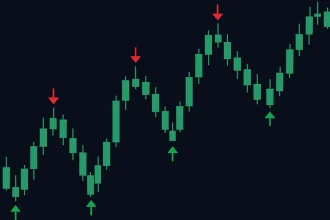
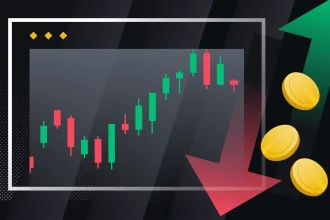
Candles, or Japanese candlesticks, are one of the most intuitive methods for visualizing price behavior over timeframes. Each candle provides four key points: Open, Close, High, and Low. These four data points create a compact picture of the battle between buyers and sellers, helping the analyst read the market’s strength, direction, and sentiment.
A Brief Look at the History of Candles
The candlestick method was first popularized by rice traders in Japan. The goal was to record and smoothly display price changes so that recurring patterns could be identified more quickly. In recent decades, this method has been globally adopted and is now the standard across trading platforms from Forex to Crypto and Stocks.
Components of a Candle and What They Tell You
- Body: The distance between open and close. A large body means one-sided dominance; a small body means balance or indecision.
- Wicks/Shadows: The lines above and below the body showing the high and low of the period. Long wicks often indicate price rejection or quick reaction.
- Color: Usually green/white for bullish (close higher than open) and red/black for bearish. Color quickly conveys market bias.
- Range: The difference between high and low of the period; an indicator of volatility. Large ranges imply more risk and opportunity.
Common Candle Patterns and Practical Interpretations
Candle patterns gain meaning when interpreted in the context of trend, supply/demand zones, and volume. Below are practical interpretations of widely used patterns:
- Doji: Open and close are close together; indicates indecision. At tops, it can signal distribution, and at bottoms, accumulation.
- Hammer: Long lower wick, small body at the top; selling pressure absorbed. At support zones, it can trigger a bullish reversal.
- Engulfing: A large candle completely covers the previous one; shift in balance of power. Bullish engulfing at bottoms carries more weight.
- Morning/Evening Star: A three-candle reversal pattern; combination of gap, small candle, and strong candle opposite to the prior trend.
- Pin Bar: Very long wick and small body; price rejection at a key level. Confirmation with volume or breakout reduces risk.
Price Display Methods: Beyond Classic Candles
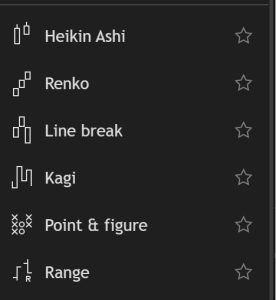
The choice of chart type affects the quality of your decisions. Some charts reduce noise, while others provide more detail on time and range. The key is to know what each chart shows and what it hides.
Method | Basis | What You See | Main Use |
|---|---|---|---|
Candlestick | Time + OHLC | Body and wicks, full detail | Price action, patterns, all timeframes |
Bar | Time + OHLC | Vertical bar with open/close markers | Simpler view with full information |
Line | Time + Close | Path of closing prices | Quick trend view, noise filtering |
Heikin Ashi | Averaging of candles | Smoothened candles | Highlighting stable trends |
Renko | Price movement (Box size) | Bricks without fixed time axis | Noise removal, focus on swings |
Kagi | Significant price changes | Thick/thin lines | Identifying trends and major reversals |
Point-and-Figure | Price movement + threshold | X and O regardless of time | Spotting breakouts and classic patterns |
Heikin Ashi: When the Trend Needs to Be Clearer
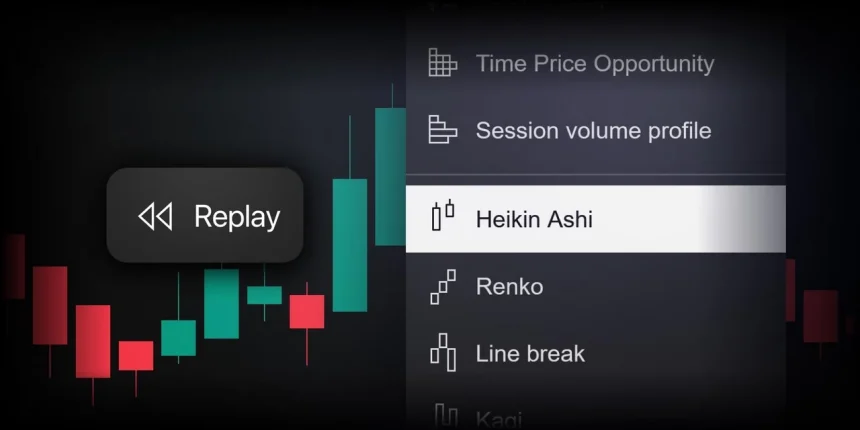
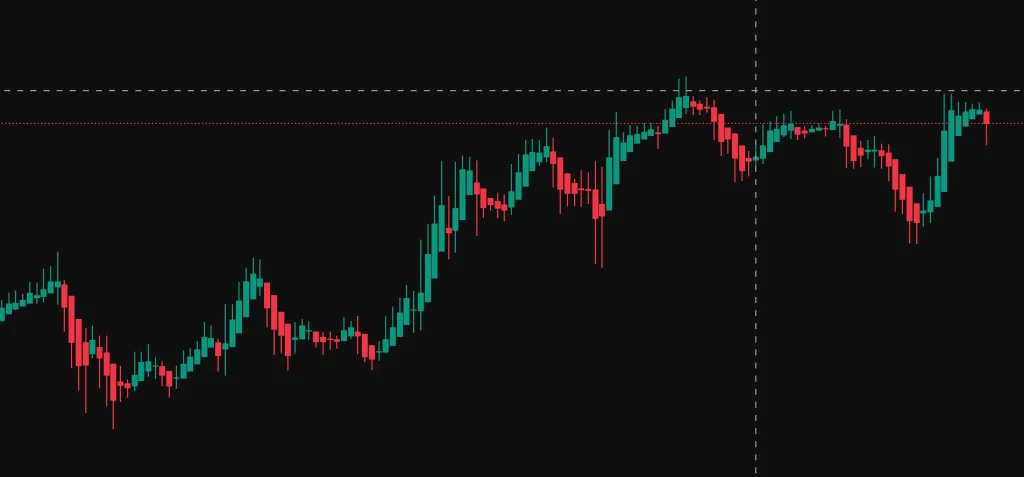
Heikin Ashi smooths out minor fluctuations by averaging candlestick data. The output is a series of aligned candles that make it easier to identify trend continuation or trend weakness. It is useful for filtering early signals in lower timeframes.
Renko: Leave Time Aside
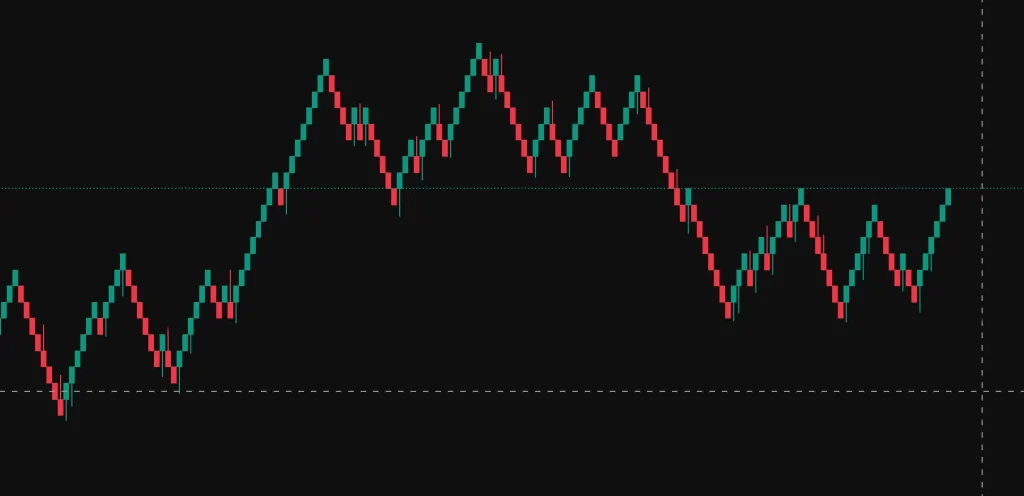
In Renko, a new brick is created only when price moves by the set box size. The result is the removal of insignificant price traffic and the highlighting of meaningful moves. The box size depends on the asset’s volatility and the trader’s horizon.
Kagi and Point-and-Figure: The Language of Major Trends
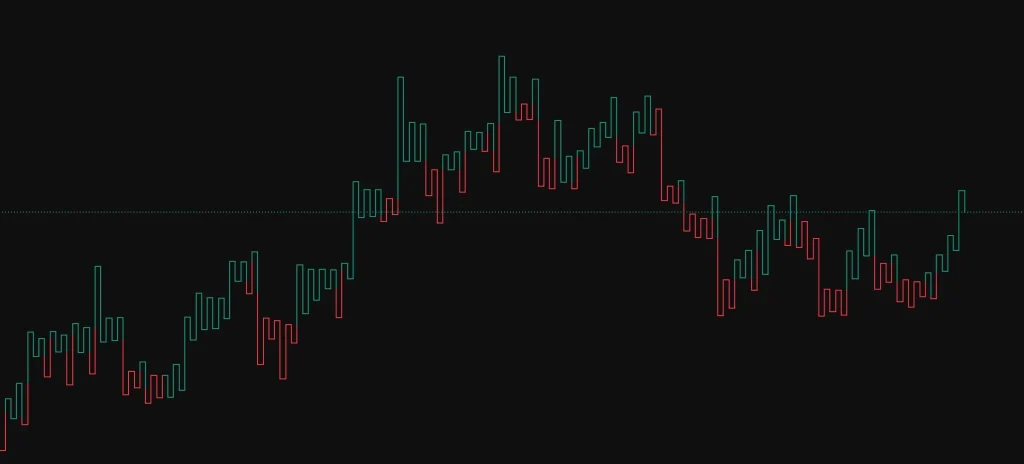
These charts are appealing to trend analysts because they react only to significant changes. Point-and-Figure clearly shows price breakouts, while Kagi narrates weakness/strength transitions through changes in line thickness.
How to Read Candles in Practice? (Practical Guide)
- Contextualization: Before candle reading, identify the dominant trend, supply/demand zones, and top/bottom structures.
- Body-to-Wick Ratio: Large body with short wick = decisive move. Long wicks = price rejection or struggle.
- Candle Sequence: Three to five consecutive candles in the same direction with increasing ranges often indicate trend momentum.
- Interaction with Volume: A candle pattern confirmed by volume has higher validity. Low volume in breakouts is a warning.
- Multiple Confirmation: One candle is not enough; confirm with structure, levels, RSI/ATR, or entry timing.
Advantages and Limitations of Working with Candles:
- Advantages: Complete OHLC information, usable in all markets and timeframes, suitable for price action.
- Limitations: Sensitive to noise, interpretation depends on context, possible false signals in news or spikes.
- Practical Solutions: Use volatility filters (ATR), Heikin Ashi averaging, confirmation with volume and levels.
A Simple Workflow for Decision-Making with Candles
- Identify Context: Mark the dominant trend and key zones.
- Observe Candle Behavior: Evaluate body sizes, wicks, and sequences.
- Define Scenario: If a level breaks and you see a confirming candle with volume → enter; otherwise wait.
- Risk Management: Stop-loss based on candle structure (below/above rejected wick) and position size with ATR.
- Review: Record pattern performance in a journal to identify biases and optimizations.
Frequently Asked Questions
Is a Candlestick Chart Better or Heikin Ashi?
Classic candles provide full detail; Heikin Ashi reduces noise. If you need detail, use classic candles. If you want clearer trends, Heikin Ashi is better. Many traders use both side by side.
Why Do Candle Patterns Sometimes Fail?
Because location matters more than shape. A good pattern in a bad place (e.g., against a strong trend or in the middle of a range) fails. Multiple confirmation and risk management are essential.
Is Renko Suitable for Scalping?
If the box size is too small, noise returns; if too large, signals come late. For scalping, dynamic adjustment based on current volatility and interval testing is necessary.
Conclusion
Candles are the compressed language of the market, but their correct interpretation depends on context. By understanding components, valid patterns, and wisely choosing chart types (Candlestick, Heikin Ashi, Renko, etc.), you can make more precise decisions. Combining candle reading with market structure, volume, and risk management is a sustainable path to improving trading results.